Everyone knows “Content is King” but you are not ranking on google for your awesome content.
Do you know why?
There are certain factors for On-page SEO which are a little technical and need special attention while publishing your content online.
I would rather say “Content is king if On-page SEO is done correctly”. Google has run unlimited algorithm updates since 2002 but one thing, which never changed till now, is On-page SEO.
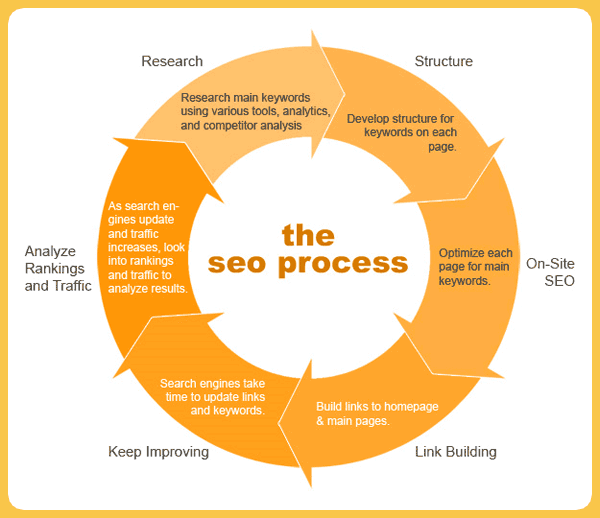
There are multiple factors while creating content that converts readers into customers and drives traffic from search engines as well. Alpha Bee Design gives a clear picture of the SEO process:
ex-employee for Search operations & webspam and SEO veterans at Google created a number of articles, videos and forum comments on Onpage SEO to help fellow content creators to write SEO Friendly Blog.
Here I have created a checklist to follow while optimizing a page on the basis of Onpage SEO.
#1 Blog
Title
The first thing to check while writing a piece of content is Blog Title SEO. Generally, it can be anything you think but if you follow certain points experimented by top bloggers and SEOs of the world, you will get decent ranking and results.
Checklist to “Blog Title” as Per On-Site SEO
— —- – – – – – – – – – – – – – – – – – – – – – – – – – – – – – – – – – – – – – – – – – – – – – – – – – – – – – – – – – –
☐ Add modifiers to a title like 2019, checklist, Guide, review, top, best, ultimate, etc.
☐ Blog title should be H1 tag (in WordPress title is automatically set as H1 tag)
☐ The title should be engaging and long not short
☐ Tweak your blog title according to search and social media differently using Yoast by SEO.
#2 Meta Tags
The most important factors for the search engine optimization of a webpage are “Meta Tags” Since the Search crawlers are developed which automatically check your webpage content, Meta Tags are the first factor that they check and create a cache in their database.
When a new user search for a query on the Google search box, Search crawlers go with the meta tags first from its pool of data. Then show the most relevant page to the user and the first factor in that are Meta tags. Link building in 2019 is also important to rank in Google SERPs.
For Example, We, VGGRoups, are ranking for our business keyword “Digital Marketing Agency” on rank 4 at google India (which has 40,500 search volume per month, quite competitive). Check out the meta tags and keywords optimization for the webpage.
On-Page SEO Checklist to “Meta Tags” SEO
— —- – – – – – – – – – – – – – – – – – – – – – – – – – – – – – – – – – – – – – – – – – – – – – – – – – – – – – – – – – –
☐ The Meta Title should be optimized under 60 chars but it’s not necessary to optimize the blog title under 60 chars.
☐ Meta titles must have a target keyword and if possible in starting.
☐ Meta Description should have LSI Keywords (Synonyms and relevant phrases)
☐ Meta Description should be optimized to get high CTR through google search page
☐ Meta Keywords are not required.
— —- – – – – – – – – – – – – – – – – – – – – – – – – – – – – – – – – – – – – – – – – – – – – – – – – – – – – – – – – – –
#3 Blog Post Content Structure
Internet is flooded with billions of pages and every other blogger is writing every second and trying to get some eyeballs online.
You need to think why would a user read your content instead of others.
Here matter the content structure and heading tags that should be highly structured from the point of the user as well as search engines. Better the content is structured better would be rankings. Salesforce has created an ultimate Infographic to understand a perfect blog post structure that you can check here.

Checklist of Onsite SEO to “Content Structure”
— —- – – – – – – – – – – – – – – – – – – – – – – – – – – – – – – – – – – – – – – – – – – – – – – – – – – – – – – – – – –
☐ Focus on 1–2 long-tail keywords that match the intent of your ideal reader.
☐ Target Keyword should come in very first paragraph.
☐ Use H2 and H3 tags to create a well-defined structure for readers.
☐ Use short paragraphs of 3-4 lines and use bulletins or numbers.
☐ Use target keywords in H2 tags if possible (Google’s Zeroth position read these Heading tags and bulletins, so use them wisely.)
☐ Try to create well-researched content of around 2000 words.
☐ Sprinkle LSI Keywords around the writeup.
☐ Content should be easily consumable. (The easier the consumability, the longer the user invests time on a blog post. Indirectly improve the dwell time of a page and counter google Rank-Brain algorithm.)
— —- – – – – – – – – – – – – – – – – – – – – – – – – – – – – – – – – – – – – – – – – – – – – – – – – – – – – – – – – – –
Brian Dean and his team on Backlinko ran their own analysis of optimum length of content to rank on Google, here’s what they found.
#4 Internal linking
The best and do-able SEO tactic is internal linking. Most of the long term keywords rank through content and internal linking. Link all of your content with each other.
Internal linking puts meat on the bones of a logical site hierarchy. Moz’s article on internal links lists three reasons why they are important:
They allow users to navigate a website.
They help establish information hierarchy for the given website.
They help spread link juice (ranking power) around websites.
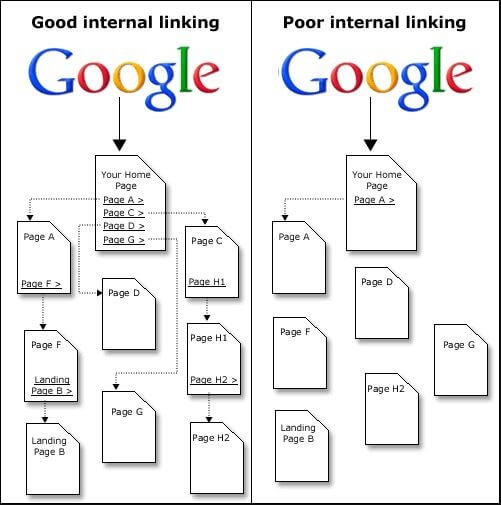
But it’s important to focus that internal linking should be keywords based and should not be done so aggressively as it lowers the text/HTML ratio which is prescribed as above 15%.
Checklist to “Internal Linking” as Per On-Site SEO
— —- – – – – – – – – – – – – – – – – – – – – – – – – – – – – – – – – – – – – – – – – – – – – – – – – – – – – – – – – – –
☐ Interlink as max the same level pages and link to 1 or 2 target landing pages.
☐ Use Target keywords to link internal pages.
☐ Do not link the same page in one blog post twice.
— —- – – – – – – – – – – – – – – – – – – – – – – – – – – – – – – – – – – – – – – – – – – – – – – – – – – – – – – – – – –
For example – all the blog posts on a domain are on the same level, but service pages are above the level of the blog post and the homepage is at the top level.
This image might help you to understand how to link the pages and blog posts.
#5 Image Alt Text
Images are 50% more engaging than text-based content and we use images in almost all the web-pages.
but
Do you optimize the images to be able to rank in SERPs as well? Images also need optimization like videos and it helps a lot writing SEO friendly content.
On-page SEO Checklist to “Image Alt text”
— —- – – – – – – – – – – – – – – – – – – – – – – – – – – – – – – – – – – – – – – – – – – – – – – – – – – – – – – – – – –
☐ Always fill the image alt text and description and feed the target keyword in the alt text of the image.
☐ Use the image description to explain the image context and target keyword of the blog post.
— —- – – – – – – – – – – – – – – – – – – – – – – – – – – – – – – – – – – – – – – – – – – – – – – – – – – – – – – – – – –
#6 Outbound Links
No one knows everything, we need to take help from other’s knowledge.
Do you publish research, facts, and infographics in your blog posts?
If not you are missing a bigger factor of authentic content. The Internet has a number of research papers and facts that help to make your content worthy and shareable.
Link to source or reference of facts, research, images to show that you respect other’s content as well. It creates authority in the eyes of the audience and search engines.
Checklist to “Outbound links” for SEO friendly content
— —- – – – – – – – – – – – – – – – – – – – – – – – – – – – – – – – – – – – – – – – – – – – – – – – – – – – – – – – – – –
☐ Link to similar industry blogs and high authority research pages.
☐ Provide content source pages. (Google loves well researched and reference linked pages.)
— —- – – – – – – – – – – – – – – – – – – – – – – – – – – – – – – – – – – – – – – – – – – – – – – – – – – – – – – – – – –
#7 URL Structure according to Search robots
URL is 2nd most important factor after meta tags that search robots look for. Your URL also shows the content and what’s in it for the user. Short and clean URLs always win. The below image will help you to understand the perfect structure of an SEO friendly URL.
URL structure Checklist for perfect Onpage SEO
— —- – – – – – – – – – – – – – – – – – – – – – – – – – – – – – – – – – – – – – – – – – – – – – – – – – – – – – – – – – –
☐ Add the main keyword in starting
☐ Under 55 Chars
☐ 3-4 words
☐ Avoid using stop words like at, on, in, how, to, etc. if possible
☐ Use a hyphen to separate two different words in a URL
☐ Avoid using underscores
☐ Avoid using date and year in URL
Here’s a snippet from the interview.
This Onpage Seo checklist can help you to develop a Search engine friendly blog post that will drive eyeballs from Search Engines.
If you have anything to add in the list, Spill your brainy juice about Onpage SEO in the comments section below.
If you are looking at getting your digital communication audited, do get in in touch with us at info@vggroups.com
 Digital Markekting Agency